Statistics rarely make anyone cry. But sit with India’s artisan data long enough and it starts to read like a family album, one where you can see exactly which generation begins to go missing.
Start with the headline figures. The Development Commissioner (Handicrafts) has registered over 64 lakh artisans through its Pehchan identity card initiative. That number is a floor, not a ceiling, since registration is voluntary and many artisans work outside formal channels. The 4th All India Handloom Census (2019–20) counted 35.2 lakh handloom workers across 31.4 lakh households. The PM Vishwakarma scheme, covering eighteen traditional trades, drew tens of lakhs of registrations within its first years, evidence of how many Indians still identify themselves by an inherited skill.
Three patterns inside the data
It is a women’s economy. More than 70% of handloom workers are women, and in allied work like spinning and pre-loom processes the share rises further. Every rupee that reaches a weaving household is, statistically, most likely reaching a woman, and decades of development economics tell us that is the single best predictor of money reaching children’s education and nutrition.
It is a rural, district-level economy. The overwhelming majority of artisan households are in rural India and small towns. Craft is one of the very few industries whose map matches the map of India’s population rather than the map of its metros.
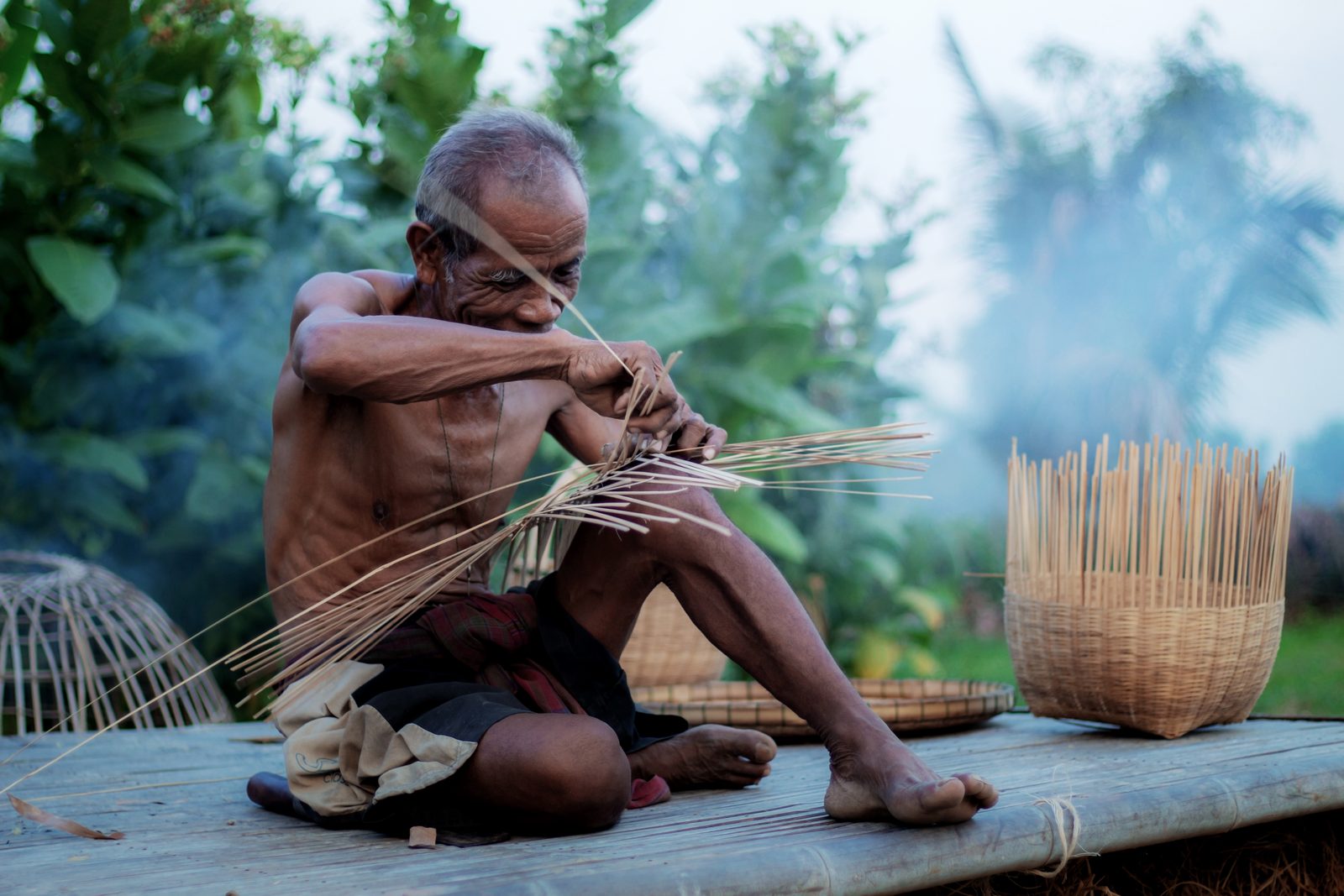
It is ageing. Census after census, the average age of the practising artisan rises and the share of workers under thirty falls. The children of weavers are not becoming weavers. From inside a struggling household, that is a perfectly rational decision. Seen at the scale of the nation, it is a slow-motion loss of irreplaceable capability.
“Data is how a country notices things. And the data says: the last generation to fully hold India’s craft knowledge is working right now.”
Reading the data as a to-do list
Numbers like these are usually quoted to inspire despair. We read them differently, as the most precise to-do list Indian development has ever been handed. The registration data tells us exactly where artisans are. The census tells us their incomes, their looms, their debts. The GI registry tells us which crafts have protectable identity. Together they form a map of where Skill Centers should stand, which clusters need market access first, and where a single intervention (design input, credit linkage, one committed industrial buyer) would change hundreds of households at once.
India does not lack information about its artisans. What it lacks is institutions willing to act on that information with the urgency the numbers demand. Building those institutions is the work.