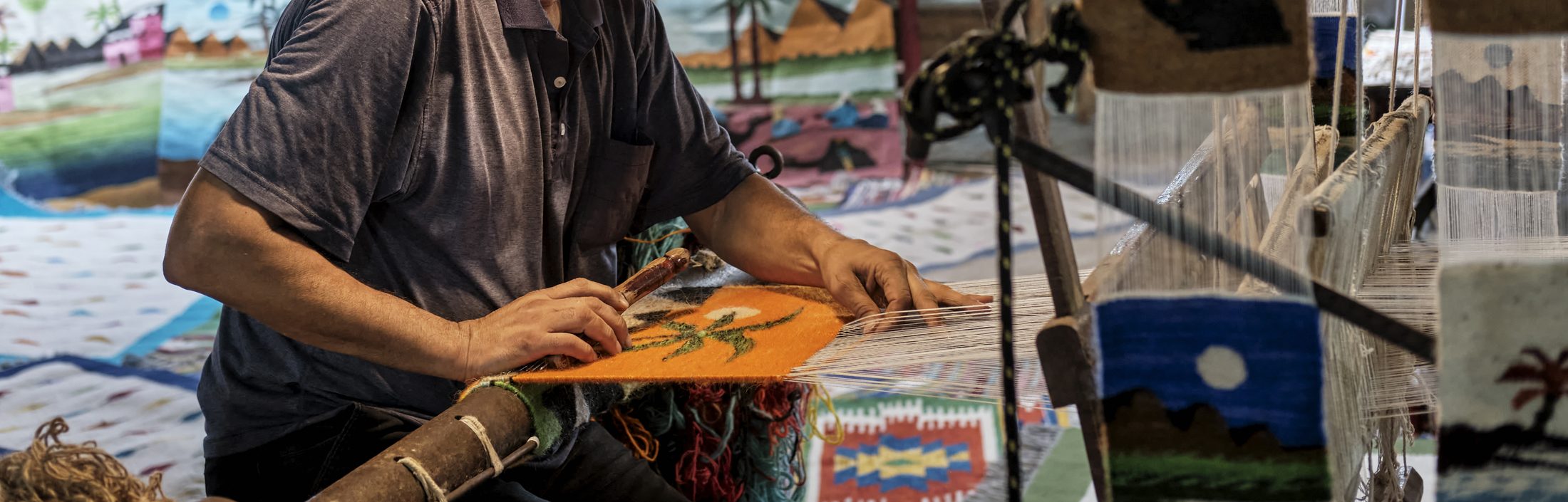
Every conversation about India’s economic future begins in the same places: semiconductors, software, space. Rarely does it begin at a loom in Kanchipuram or a potter’s wheel in Kutch. That is a strategic blind spot, because by the government’s own numbers, India’s craft economy is one of the largest employment engines the country has.
Over 64 lakh artisans are registered with the Development Commissioner (Handicrafts) under the Ministry of Textiles. The 4th All India Handloom Census counted 35.2 lakh handloom workers, more than seven in ten of them women. Then add the allied trades, meaning the eighteen occupations recognised under the PM Vishwakarma scheme, from carpenters and blacksmiths to goldsmiths and cobblers, and India’s traditional skill economy comfortably touches every district in the country. Handicraft and handloom exports together earn well over ₹30,000 crore a year, reaching markets in the United States, Europe and the Gulf.
Big numbers, small incomes
Here is the paradox: a sector this large, earning foreign exchange with almost no imported inputs, is also home to some of India’s lowest household incomes. The Handloom Census found that the majority of weaver households earn less than ₹10,000 a month. The value their hands create is real; it simply doesn’t reach them. It leaks away through long chains of intermediaries, absent branding, and no direct line of sight between maker and buyer.
“A country that can put a lander on the Moon can certainly put a fair price in a weaver’s hand. The capability is there. What has been missing is the attention.”
The consequence is predictable and measurable: each census cycle records fewer young people entering the crafts. When a workforce ages without replacement, an industry doesn’t merely shrink. It evaporates. And unlike a factory, a craft cannot be restarted once the last master retires. The knowledge is the capital, and it walks away on two feet.
Why this matters for 2047
India’s Vision 2047 imagines a developed economy of roughly thirty trillion dollars. Every serious analysis of that goal says the same thing: it cannot be reached by services alone. It needs manufacturing, it needs employment breadth, and it needs the districts, not just a dozen metros, to produce and prosper. The craft economy is the only industrial base India has that is already spread across all 700-plus districts. It is green, it is export-proven, and it is owned by the people who work in it.
Reviving it is not charity so much as the cheapest industrial policy available to India: the factories are built, the training institutions exist in the form of master artisans, and the global market for authentic, sustainable, handmade goods keeps growing while mass manufacturing races to the bottom.
What the sleeping giant needs
Three things, in order. First, transmission: structured ways for masters to pass on their skill with dignity and pay, which is the role our Skill Centers are built for. Second, translation, by which we mean the design, quality and product development that connect old techniques to new buyers. Third, transaction: honest market access where the artisan’s share of the final price is a matter of design, not luck. That is the purpose of the MakeMyIndia Marketplace.
None of this requires inventing anything new. It requires deciding, as a country, that the hands which carried Indian civilisation this far deserve a first-class seat in its future. That decision is what MakeMyIndia Foundation exists to organise.