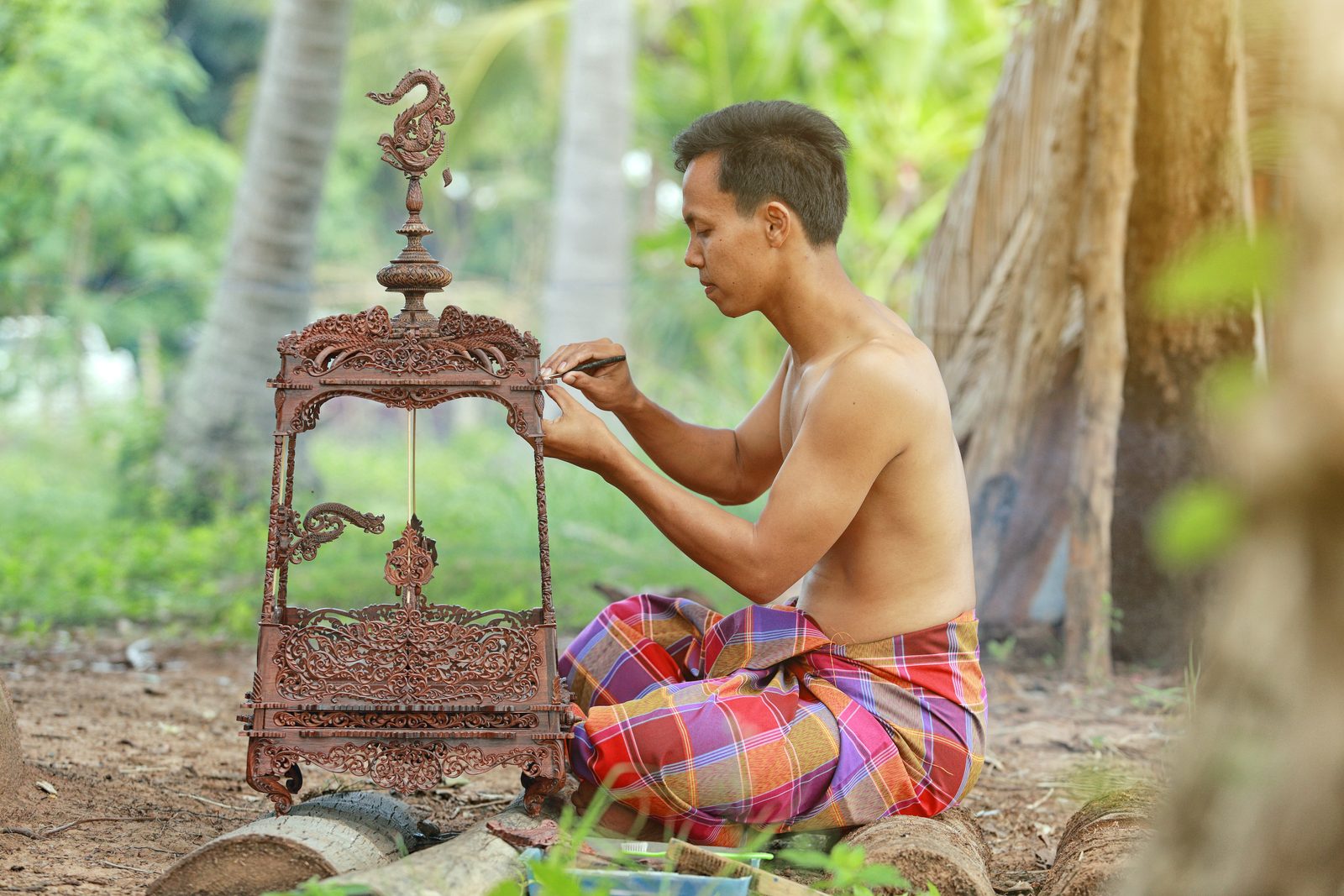
Ask a classroom of Indian ten-year-olds what they want to become, and you will hear doctor, engineer, civil servant. You will almost never hear weaver, carpenter, luthier, master mason, even from children whose own grandparents were exactly that, and brilliant at it. That is no accident of aspiration; it is the output of an education system that has taught three generations that working with your hands is what you do if your marks fail you.
The numbers describe the result. According to the Periodic Labour Force Survey, fewer than 5% of India’s workforce has received formal vocational training, against figures several times higher in Germany, Japan or South Korea, countries that industrialised precisely by honouring technical skill. Meanwhile India produces millions of graduates each year into a market that cannot absorb them in the roles their degrees promised, while industry reports persistent shortages of skilled trades. We have built an education system that manufactures the wrong scarcity.
The exam that ate the school
At the root is a single design choice: an assessment culture that measures memory under time pressure and calls it merit. Everything a child cannot show on a written paper (spatial genius, material intuition, patience, craft, the ability to make something real) is invisible to the system, and what a system cannot see, society stops valuing. The National Education Policy 2020 says this plainly and prescribes the remedy: vocational exposure for every student, no hard wall between academic and vocational streams, and dignity for every form of knowledge. The policy is right. The task is to make it real, on the ground, at scale.
“A nation that tells its most skilled hands they have failed its exams has failed its own future.”
What honouring mastery looks like
Imagine a schooling journey where a term spent under a master craftsperson carries the same weight as a term of theory. Where a certificate of mastery in a traditional trade is a recognised credential for employment, entrepreneurship and further study. Where the child of a bronze-caster learns mathematics through metallurgy and geometry through moulds, and tops both. None of this is romanticism; it is how the world’s most respected apprenticeship systems already work.
Our founder started MakeMyIndia Foundation in part from this conviction: that India’s traditional education of the hand (the gurukul, the ustad-shagird lineage, the family workshop) was a sophisticated pedagogy the modern system discarded rather than absorbed. Our Skill Centers are designed as working proof that the two can be rejoined: rigorous, certified, modern education in which mastery of a craft is the curriculum, not the consolation prize.
By 2047, India will have the world’s largest workforce. Whether that is a dividend or a disappointment depends less on how many degrees we print than on whether we finally build an education system that can look at a pair of skilled hands and recognise a first-class mind.